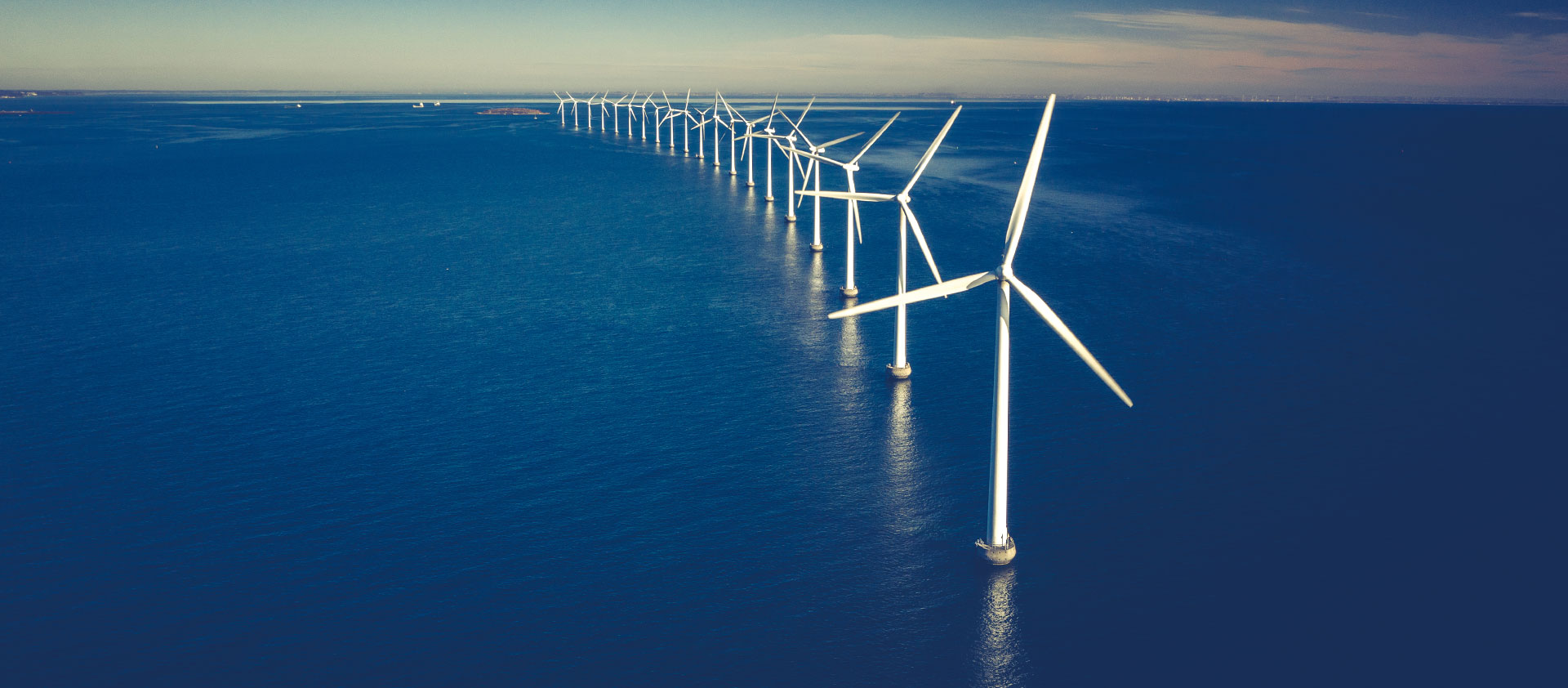
Wind farm turbines on the water

Media

CEF in the media  |  May 10, 2026

Australia’s data centre dilemma: energy boom or bust?

Canberra Times

via AAP in Canberra times and across 100+ mastheads “It’s been really important that the federal government has said we want you to solve the problems you’re creating before we approve your projects,” he says. “They can be clearly told if you bring your battery, your solar and your wind project and your (desalination) plant with you, the chance you’re getting approved is really high.” If given clear renewable energy requirements, data centres could trigger a new wave of energy projects, Mr Buckley says, and provide the necessary financial support to encourage investments from other firms. Read more
CEF in the media Podcasts  |  May 8, 2026

PODCAST | Tim & Grant McDowell on Spark Club: Pre-budget LNG and diesel rebate tax reform & The Green Metal Statecraft report

Spark Club Podcast

Main Story: Our Clean Energy Finance Report: Green Metal Statecraft: Policy, Investment and Technology Trends in the Green Iron Evolution Highlights – The SEC Sydney conference – Fuel Tax Credit reform – The Cheaper Home Batteries Program and Accelerating capital deployments – More RE share => lower energy prices Lowlights – The Albanese government has ruled out a 25% LNG export levy, very disappointing – We did secure an East Coast Gas reservation of 20% of production from 1 July 2027. Good and bad, it helps reduce energy cost inflation for sure, but it also means the hurdle for electrification and decarbonisation is harder, given methane is cheaper. Read more
CEF in the media  |  May 7, 2026

Australia installs 10.7GWh of home battery storage under federal subsidy scheme

Energy Storage News

The crisis in the Middle East has sent shockwaves across the international markets. Speaking to ESN Premium in March at the Energy Storage Summit Australia 2026, Climate Energy Finance’s Tim Buckley said that geopolitical instability exposes Australia’s oil dependency and positions the country as a safe haven for international renewable energy capital. The climate finance expert, whose public-interest think tank operates without government or corporate funding, argues that sustained oil price spikes above US$100 per barrel should serve as a catalyst for the Australian government to accelerate investment in battery storage, EVs, and firm renewable energy infrastructure, rather than retreating into short-term crisis management. Read more
CEF in the media Videos  |  May 1, 2026

INTERVIEW | What is stopping Aussie industry from leading the green wave?

AusBiz

A new report from Climate Energy Finance is said by Tim Buckley to show Australia’s window to lead in green iron and steel is rapidly narrowing. Buckley states that iron ore and coking coal remain core export pillars, yet global steel decarbonisation is accelerating as governments and industry target net zero. He argues green iron depends on green hydrogen and is facing slowing momentum, project cancellations and capital cost blowouts, leaving Australia exposed to losing a “once‑in‑a‑generation” export shift. Read more
CEF in the media  |  Apr 30, 2026

Australia’s green iron domination window closing: CEF

FS Sustainability

“Australia’s window of comparative advantage in supplying green iron to the Asian steel corridor is real, with our iron ore endowment, renewable energy potential, low geopolitical risk, established trade relationships, and a large capital base of strategic, long-term capital that could be deployed into enabling infrastructure,” CEF net zero transformation analyst Matt Pollard said. Read more
CEF in the media  |  Apr 30, 2026

Coalition pledge to open up Taroom Trough and support new refineries

Energy News Bulletin

Tim Buckley from Climate Energy Finance was less reserved, saying the scraping of the mechanism was “just serving their fossil fuel paymasters.” “When I talk to industry, they go look, at the end of the day, we want policy certainty, the safeguard mechanisms in place, the price is not high, like European carbon prices…it’s not onerous. “I really would treat this as as seriously as Angus commitment to close down the Clean Energy Finance Corporation and ARENA 12 years ago,” he added. Read more
CEF in the media  |  Apr 30, 2026

Australia’s green iron advantage at risk as projects stall and China, Africa and Middle East take the lead

Renew Economy

Australia has 11 green iron proposals dotted across Western Australia, South Australia and Queensland, but none are ready for commercial production. While the federal government had launched programs to financially support their development, Climate Energy Finance director Tim Buckley said greater urgency was needed in the public and private sectors to launch projects and learn from them. “My key recommendation to the federal government is let’s actually get one, two or three first-of-a-kind (direct reduced iron) or green hydrogen-based iron projects at semi-commercial or commercial scale up and running,” he told AAP. Read more
CEF in the media  |  Apr 30, 2026

Competition puts Australia’s green iron edge at risk

Canberra Times

Independent think tank Climate Energy Finance issues the warning in a report tracking policy and projects in the sector, including 11 green iron and steel proposals in Australia. No commercial plant has reached a final investment decision, the group warns, and Australia could lose out if progress stalls for another two years. The warning comes as the federal government considers applications to its $500 million Green Iron Investment Fund for early projects, and after a Superpower Institute study found green iron exports could generate $386 billion annually by 2060. Read more
CEF in the media OP ED  |  Apr 30, 2026

OP ED | Why green iron has failed to take off

The Energy

Climate Energy Finance’s new report, Green Metal Statecraft: Policy, Investment and Technology Trends in the Green Iron Evolution, provides an update of the global and domestic investment, technology and enabling policy trends that will underpin the transformation of the iron and steel value chain in 2026. This report highlights that for every step forward on an individual project or market-level, the broader investment pipeline has just as many case studies of project delay, cancellation, and restructure in the face of unresolved structural headwinds. Read more
Media Releases  |  Apr 30, 2026

GLOBAL MEDIA RELEASE | NEW REPORT: GLOBAL GREEN IRON & STEEL PROGRESS SPORADIC & MISALIGNED WITH CLIMATE SCIENCE, REQUIRING POLICY STEPCHANGE

___

A new report by independent think tank Climate Energy Finance tracking policy, investment and technology trends in the global green iron and steel industry finds decarbonisation and electrification of the industry is undergoing structural recalibration, from speculative optimism and green hydrogen hype to incremental, halting and sporadic progress at a pace misaligned with the climate science. Steel production accounts for 7-9% of global emissions. Read more
Media Releases  |  Apr 30, 2026

AUSTRALIA MEDIA RELEASE | NEW REPORT: GLOBAL GREEN IRON & STEEL PROGRESS SPORADIC & MISALIGNED WITH CLIMATE SCIENCE, REQUIRING POLICY STEPCHANGE

___

A new report by independent think tank Climate Energy Finance (CEF) tracking policy, investment and technology progress in the global green iron and steel industry warns that Australia’s opportunity to leverage its comparative advantages to lead in low-emissions iron and steel production is narrowing rapidly, and increasingly time limited. Read more
CEF in the media  |  Apr 29, 2026

Chinese wind turbine maker accuses UK of ‘politicisation’ over product ban

The Financial Times

In recent years, Chinese companies have come to dominate the market for wind energy equipment thanks to rapid domestic deployment of powerful low-cost turbines. But their overseas investment plans have run into steeper hurdles than companies in other clean energy sectors, such as electric vehicles and solar power, said Tim Buckley, director of Climate Energy Finance, a think tank. Regulators are partly concerned about connecting Chinese-made wind turbines, which are more technologically sophisticated than other clean tech products such as solar modules, to national power grids, he said. But geopolitical concerns and the desire to protect domestic industries have also played a part. Read more
Pages:«123456789...115»

Sign up for updates

Sign up to receive occasional updates on major climate and energy finance news and developments, and notification of new reports, presentations and resources.

"*" indicates required fields

This field is for validation purposes and should be left unchanged.

Read our privacy statement here.

Error: